Avalonion
Masters of Magic
Authority over magic and masters of the leylines
Gifted with unmatched magical aptitude, the Avalonions are the foremost masters of directly manipulating the leylines that sustain WarppedEarth and every supernatural plane beyond it. Through the Offices of the Magister, the Magisterium regulates dangerous Casting, investigates magical crimes, safeguards leyline stability and confronts supernatural threats across the WarpedEarth.
Table of Contents
Racial Modifiers
Supernatural Statistics

+ 1 Channelling

+ 1 Planeslore
Defensive Statistic

+ 1 Resolve
Negative Modifier

– 1 Constitution
Badge of the Magisterium
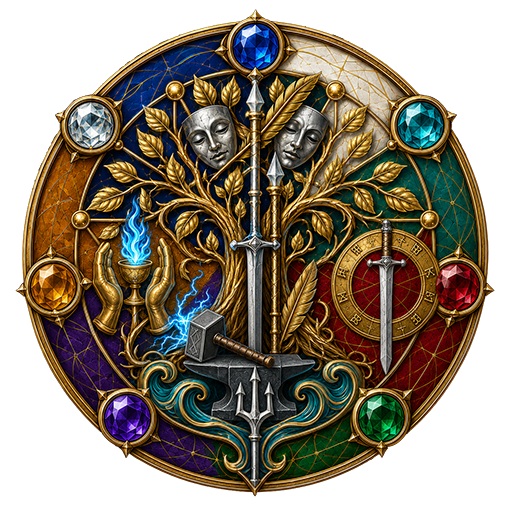
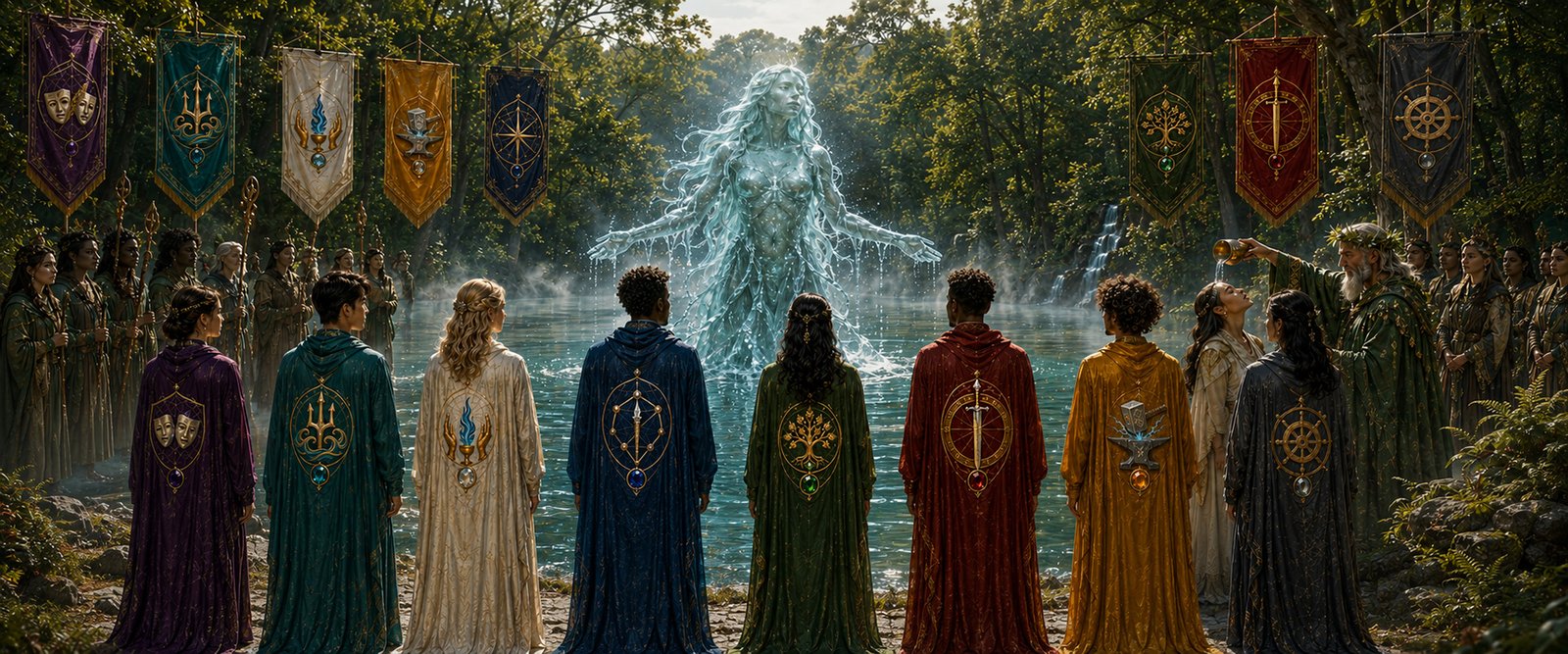
The authority of the Offices is represented by the Badge of the Magisterium, a unified emblem assembled from the heraldic regalia borne upon the shields of the Clans of Avalon. Its individual devices, jewels, colours and ornamental forms are drawn from those Clan shields and brought together within a single design. The full badge may be worn only by a recognised Magister and signifies that the wearer acts with the authority of the Offices of the Magister as a whole.
By combining the regalia of the Clans, the badge declares that the Offices do not serve one Clan alone, but exercise an authority entrusted to them by Avalon collectively. More importantly, the joined regalia symbolise the Magister’s readiness to encounter, understand and, where necessary, employ every form of magical power and Casting. No single tradition, Discipline or expression of magic defines the office. Each heraldic element retains its Clan association while contributing to a greater whole, representing the breadth of powers, traditions and responsibilities that a Magister must be prepared to face and wield.
Clan Caerwyn – The Leywrights
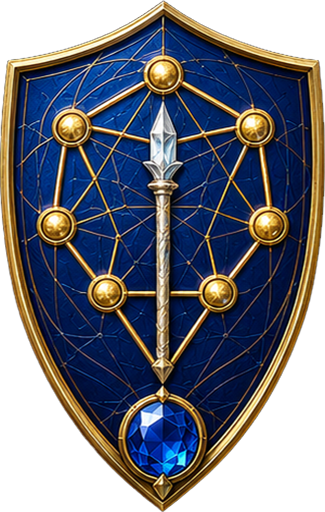
Traditional magic: Magica and leyline manipulation
Industries: Ley-power, transport, architecture, civil engineering and public infrastructure
Caerwyn constructs and maintains Avalon’s ley-engines, transit gates, mana reservoirs, floating structures and public wards. Its members are planners, architects, surveyors and engineers who believe magical power must be given a safe and deliberate purpose.
Clan population: British (Anglo-Celtic) 25%, Scottish (Highland) 20%, East Asian (Chinese) 17%, South Asian (Indian) 14%, Irish 2%, West African 2%, Southeast Asian (Malay) 2%, First Nations (Canada) 2%, Polynesian 2%, Caribbean 2%, Australian Indigenous 2%, Māori (Aotearoa) 2%, Pacific Islander 2%, South African (multi-heritage) 2%, Others 4%.
Clan ability — Leywright’s Eye: Gain Bo2 when analysing, stabilising, redirecting or repairing a leyline, ley-engine or other form of magical infrastructure.
Clan maxim: “Power must have a path.”
Clan Ferron – The Rune-Forged
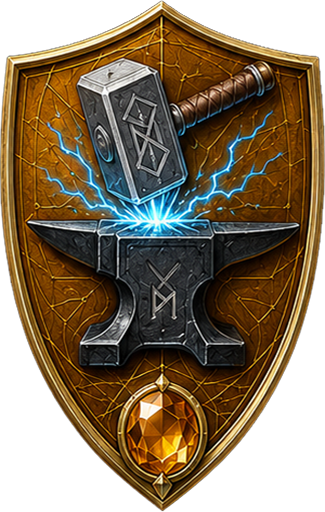
Traditional magic: Runecraft and Artificing
Industries: Enchanted manufacturing, metalwork, construction, magical machinery and armaments
Ferron transforms magical knowledge into physical creations. Its rune-smiths produce channelling jewellery, animated constructs, ritual instruments, warded armour and many of the mechanisms used throughout Avalon.
Clan population: West African 25%, South Asian (Indian) 20%, East Asian (Chinese) 17%, Caribbean 14%, British (Anglo-Celtic) 2%, Irish 2%, Southeast Asian (Malay) 2%, First Nations (Canada) 2%, Polynesian 2%, Australian Indigenous 2%, Scottish (Highland) 2%, Māori (Aotearoa) 2%, Pacific Islander 2%, South African (multi-heritage) 2%, Others 4%.
Clan ability — Arcane Mechanist: Gain Bo2 when constructing, repairing, interpreting or disabling magical devices, wards, constructs, glyphs or arcane machinery.
Clan maxim: “What is imagined must be made.”
Clan Nantara – The Living Covenant
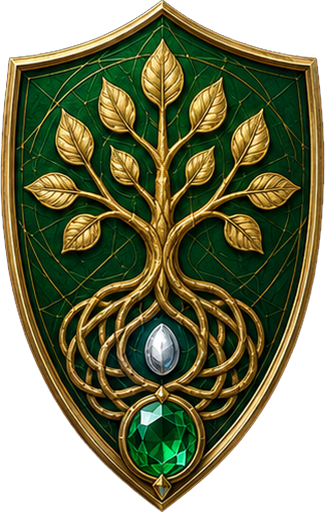
Traditional magic: Spirit and Ancient Magic
Industries: Agriculture, forestry, ecological management, animal husbandry and natural medicine
Nantara maintains Avalon’s relationships with its land, waters, spirits and supernatural creatures. Its Druids tend enchanted farms, protect sacred places and negotiate with beings inhabiting Avalon’s oldest wildernesses.
Clan population: First Nations (Canada) 25%, Australian Indigenous 20%, Irish 17%, Māori (Aotearoa) 14%, British (Anglo-Celtic) 2%, West African 2%, South Asian (Indian) 2%, East Asian (Chinese) 2%, Southeast Asian (Malay) 2%, Polynesian 2%, Caribbean 2%, Scottish (Highland) 2%, Pacific Islander 2%, South African (multi-heritage) 2%, Others 4%.
Clan ability — Living Covenant: Gain Bo2 when communing with spirits, magical beasts, sacred places or living supernatural environments.
Clan maxim: “Nothing living stands alone.”
Clan Pelagos – The Tidecallers
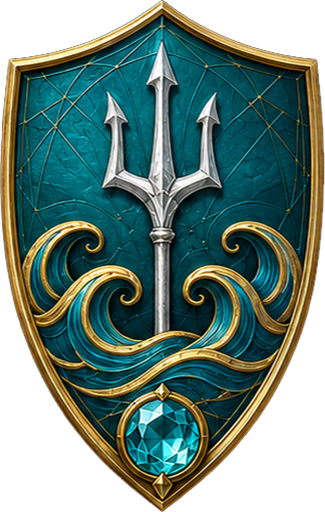
Traditional magic: Water, weather and transposition magic
Industries: Shipping, navigation, fishing, exploration and international trade
Pelagos commands Avalon’s ports, rune-ships and maritime trade. Its navigators read supernatural currents, redirect storms and guide vessels through planar tides, hidden waterways and Typhon-warped seas.
Clan population: Polynesian 25%, Pacific Islander 20%, Māori (Aotearoa) 17%, Caribbean 14%, British (Anglo-Celtic) 2%, Irish 2%, West African 2%, South Asian (Indian) 2%, East Asian (Chinese) 2%, Southeast Asian (Malay) 2%, First Nations (Canada) 2%, Australian Indigenous 2%, Scottish (Highland) 2%, South African (multi-heritage) 2%, Others 4%.
Clan ability — Tidecaller’s Instinct: Gain Bo2 when navigating magical waters, commanding a rune-bound vessel or operating within storms, supernatural seas or unstable dimensional currents.
Clan maxim: “Every horizon is a doorway.”
Clan Luminar – The Hands of Renewal
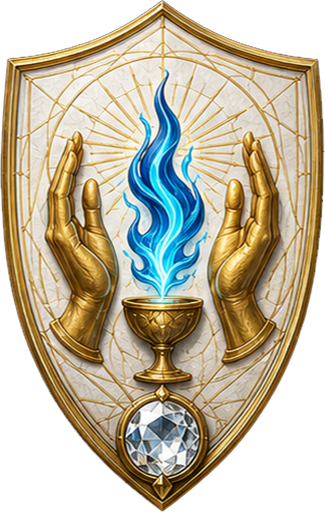
Traditional magic: Divinity, healing and protective magic
Industries: Medicine, education, sanitation, public welfare and disaster relief
Luminar operates Avalon’s hospitals, healing sanctums, schools, public baths and emergency refuges. Its specialists treat curses, supernatural diseases, magical contamination and damaged mana-veins.
Clan population: South Asian (Indian) 25%, South African (multi-heritage) 20%, West African 17%, Southeast Asian (Malay) 14%, British (Anglo-Celtic) 2%, Irish 2%, East Asian (Chinese) 2%, First Nations (Canada) 2%, Polynesian 2%, Caribbean 2%, Australian Indigenous 2%, Scottish (Highland) 2%, Māori (Aotearoa) 2%, Pacific Islander 2%, Others 4%.
Clan ability — Hands of Renewal: Gain Bo2 when treating curses, supernatural diseases, magical contamination or injuries affecting mana-veins.
Clan maxim: “Power is proven by what it preserves.”
Clan Seanara – The Many Masks
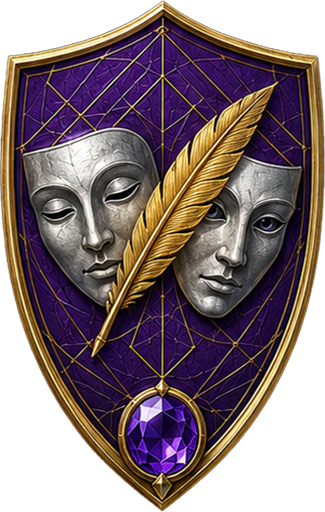
Pronounced “Shornara.”
Traditional magic: Glamour, psychic magic and divination
Industries: Diplomacy, communications, arts, intelligence and entertainment
Seanara shapes how Avalon communicates with itself and the wider world. Its members include diplomats, performers, translators, illusionists, investigators, dream-readers and magical messengers.
Clan population: East Asian (Chinese) 25%, Southeast Asian (Malay) 20%, Caribbean 17%, Irish 14%, British (Anglo-Celtic) 2%, West African 2%, South Asian (Indian) 2%, First Nations (Canada) 2%, Polynesian 2%, Australian Indigenous 2%, Scottish (Highland) 2%, Māori (Aotearoa) 2%, Pacific Islander 2%, South African (multi-heritage) 2%, Others 4%.
Clan ability — Oracle’s Gaze: Gain Bo2 when interpreting omens, reading supernatural patterns, creating controlled illusions or identifying magically concealed intentions.
Clan maxim: “Perception opens every gate.”
Clan Kharad’n – The Crimson Ward
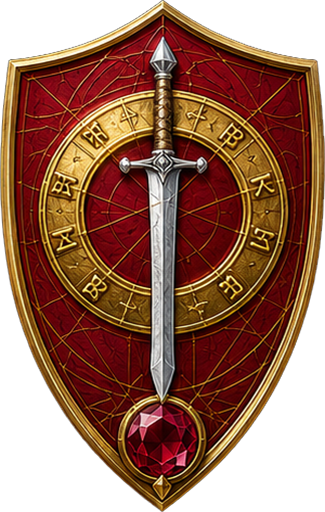
Traditional magic: Blood magic, warding and martial spellcraft
Industries: Defence, policing, security, identification and supernatural containment
Kharad’n protects Avalon from invasion, magical catastrophe and hostile supernatural forces. Its wardens use blood magic to trace curses, verify identities, reinforce the body and seal dangerous oaths. Many Knights of the Round emerge from its households and academies.
Clan population: Scottish (Highland) 25%, West African 20%, First Nations (Canada) 17%, Māori (Aotearoa) 14%, British (Anglo-Celtic) 2%, Irish 2%, South Asian (Indian) 2%, East Asian (Chinese) 2%, Southeast Asian (Malay) 2%, Polynesian 2%, Caribbean 2%, Australian Indigenous 2%, Pacific Islander 2%, South African (multi-heritage) 2%, Others 4%.
Clan ability — Crimson Ward: Gain Bo2 when tracing curses, verifying magically protected identities or oaths, containing hostile supernatural forces or defending against magical assault.
Clan maxim: “What power can harm, duty must restrain.”
Uplifted Slun
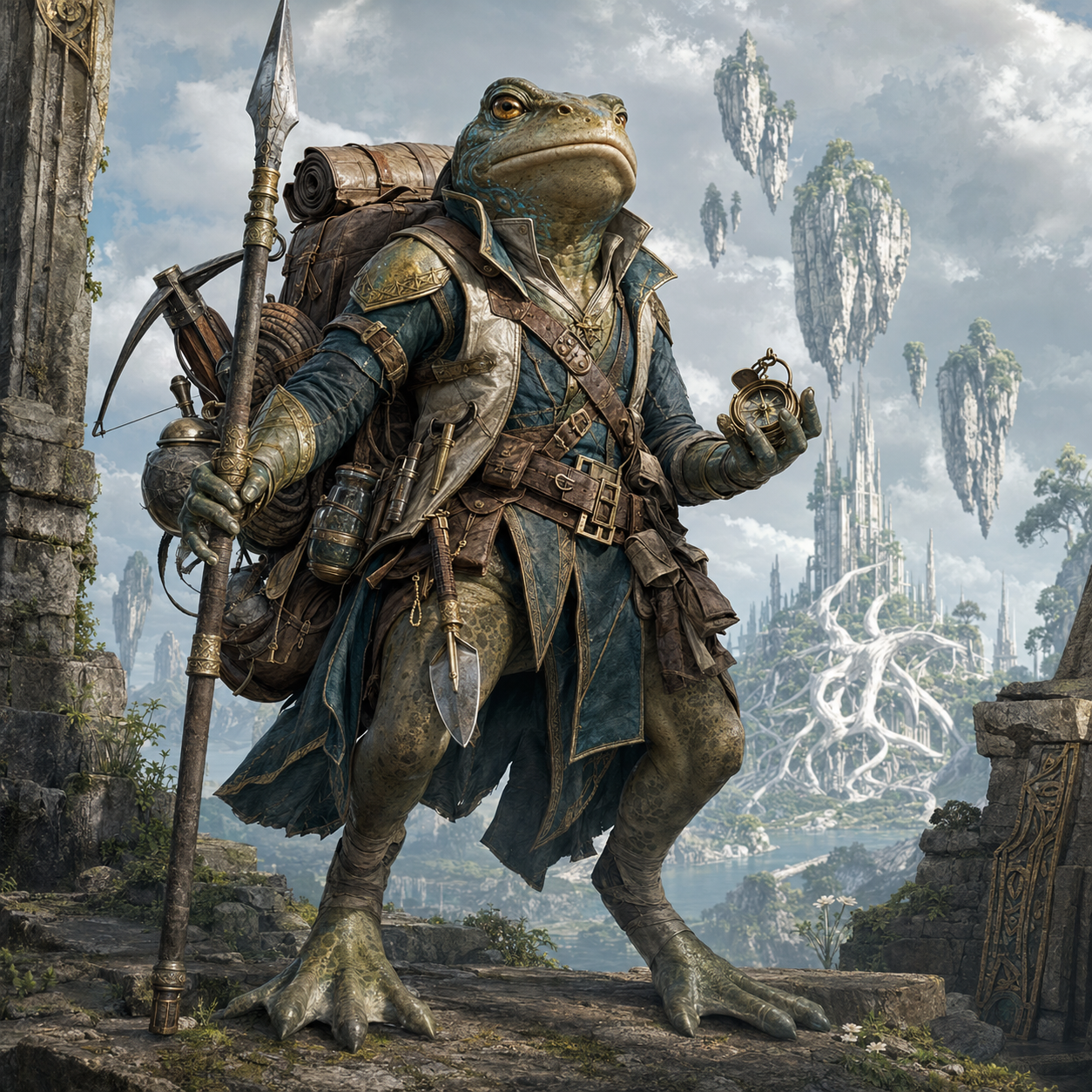
Uplifted Slun—commonly called Avalonion Slun—have undergone the Eux du Lac, the same transformative ritual through which the human peoples of Avalon were created.
For a Slun, the ritual does something extraordinary. It elevates the creature from pre-sentience to full sapience, granting intelligence, self-awareness, reason and the capacity to participate fully in civilised society.
Uplifted Slun are not slaves, animals, experimental subjects or protected dependants. They are legally recognised Avalonion citizens possessing the same fundamental rights as every other member of the nation.
Unlike human Avalonions, Uplifted Slun cannot wield magic or manipulate leylines. The Eux du Lac instead produces extensive changes to their minds, senses, pigmentation and bodies. These transformations make them unusually adaptable and extremely difficult to notice when they do not wish to be seen.
Their existence has become one of the most powerful arguments employed by abolitionists. Every Uplifted Slun is living proof that the beings enslaved across the world possess the potential to become fully sapient people.
Uplifted Slun Ability: S-Ability: Remain Unseen:1
“Don’t All Slun Look the Same?” – The Eux du Lac grants an Uplifted Slun a combination of adaptive pigmentation, altered posture and a subtle supernatural quality that encourages observers to overlook them.
Racial Modifiers
Active Statistics: +1 Athletic, +1 Scholar
Defensive Statistic: +1 Evasion
Negative Modifier: −1 Technical
Gain Bo2 when sneaking, hiding or attempting to pass unnoticed.
This ability is not invisibility. The Slun remains physically present and can be seen by anyone deliberately searching for them. Instead, casual observers fail to distinguish the character from their surroundings, other Slun or the countless supposedly unimportant details competing for their attention.
The ability cannot conceal an Uplifted Slun who is behaving conspicuously, openly attacking someone or directly demanding attention.
Strength: Ley-Bound Arcana
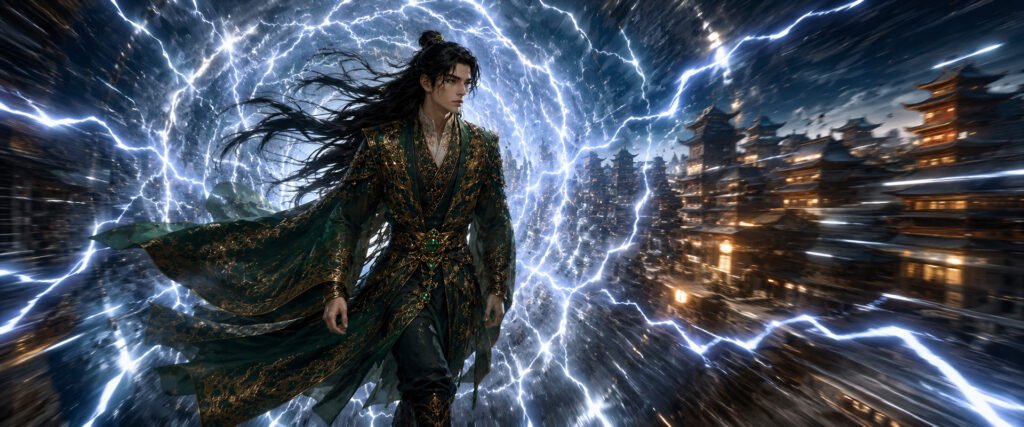
Avalonions awakened through the Eux du Lac possess an innate relationship with leylines and may use High Magic to work through them directly. Other Casters can manipulate leylines only through the specialised Invocations of the Féth Fíada Discipline.
Gain Bo2 when undertaking structured magical study, analysing an active supernatural effect, interpreting runes or assisting with a Ritual concerned with magical containment.
When an Invocation using High Magic or Féth Fíada directly detects, regulates, redirects, binds, seals or stabilises a leyline, add +1 Effect Die where that Invocation already rolls Effect Dice. This bonus does not create a new effect or increase an Invocation beyond its written permissions.
This ability does not apply to Uplifted Slun, who cannot wield magic.
Weakness: Mana-Vein Vulnerability
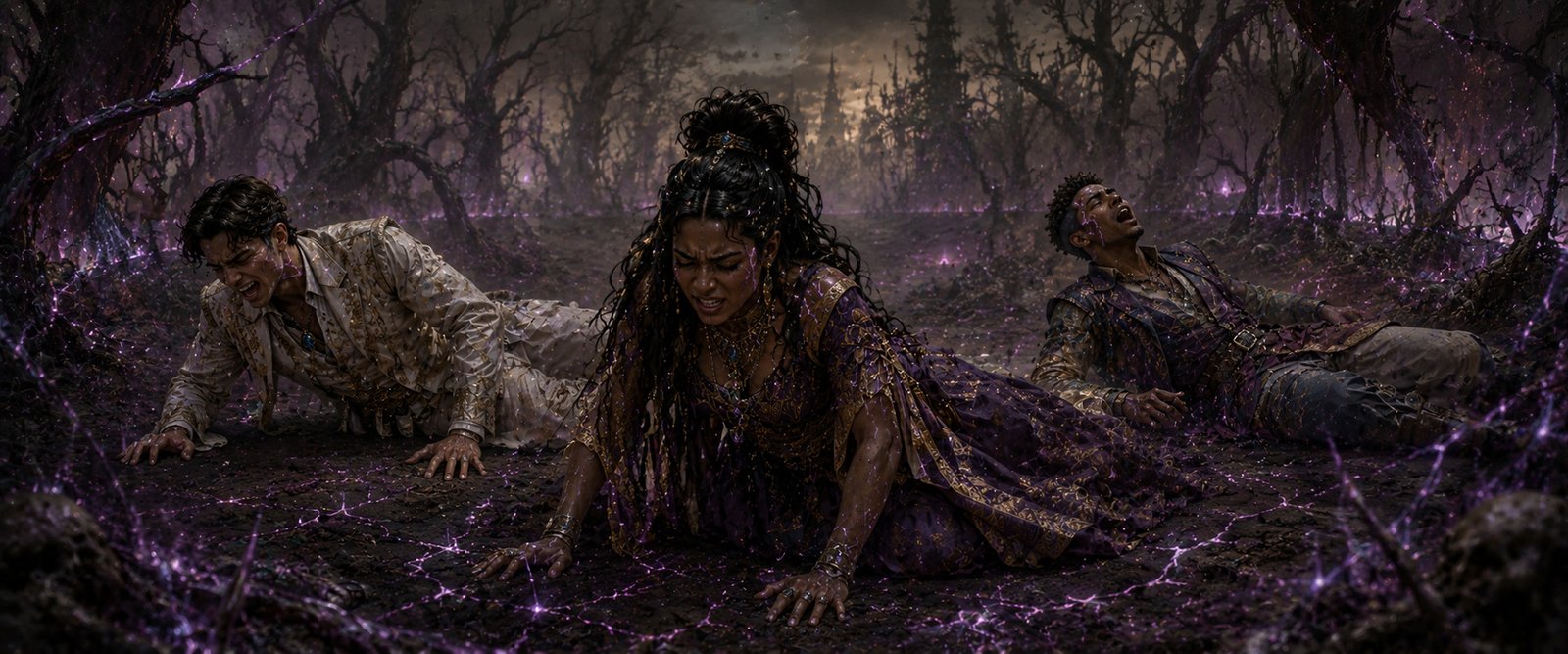
The mana-veins that make Avalonion magic possible also render them unusually vulnerable to anti-magic effects, supernatural overload and effects designed to disrupt magical flow.
When an Avalonion is successfully affected by anti-magic, leyline disruption or magical suppression, they gain the tag Ley-Strained.
Their next supernatural action is made at Wo2 unless they spend an action stabilising their mana-veins or receive suitable assistance.
The Kindred Right
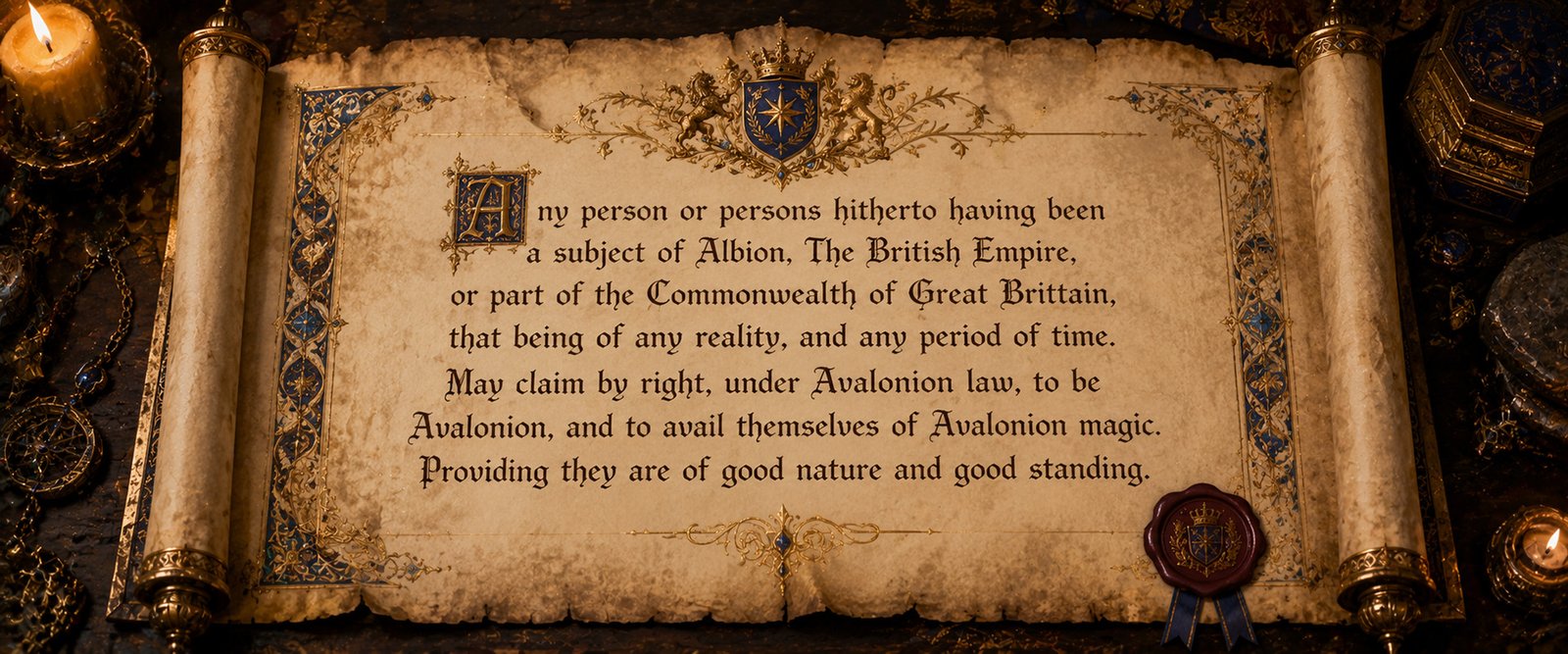
“Let Avalon’s gates stand open to all those whom hath ever been most kindred to us and our peoples.”
—Arturius Pendragon I
With those words, Avalon opened itself to an astonishingly broad family. Anyone with roots in Albion, the British Empire, the Commonwealth—or their counterparts in another age or reality—may petition for Avalonion citizenship.
That includes peoples from Britain and Ireland, Africa, the Caribbean, India and the wider subcontinent, Canada, Australia, Aotearoa, the Pacific, Southeast Asia, the Middle East, Hong Kong, Singapore and Malaya. It also includes the peoples of the United States of America: descendants of the Thirteen Colonies, later American communities once governed by Britain, and their equivalents across other realities. Avalon currently recognises 302 eligible peoples and territorial populations—and Merlin insists the clerks have still missed some.
Claiming Your Place
The Kindred Right is an invitation, not an automatic passport. A claimant must demonstrate a genuine historical or ancestral connection and be judged a person of good nature and standing. Avalon cares more about character than pedigree: courage, compassion and loyalty carry considerably more weight than wealth or titles.
A successful claimant may become an Avalonion citizen, enter one of the Seven Great Clans and, when suitable, undertake the Eux du Lac ritual to receive Avalon’s magical inheritance.
Using the Kindred Right in Play
The Right allows a character from almost any period, culture or alternative history to reach Avalon with a legitimate claim. Proving that claim can itself become an adventure: recover a lost colonial record, question a centuries-dead witness, expose a fraudulent lineage or discover why Merlin remembers your family name.
Your character might be an American descended from a vanished colony, a Caribbean privateer, an Indian physician, a Māori navigator, an African veteran, a Hong Kong investigator—or someone from a Britain that never existed in this reality.
A Nation of Unexpected Kin
The Kindred Right explains why Avalon is among the most culturally and ethnically diverse nations in the WarpedEarth. Every Great Clan contains all fourteen principal Avalonion ethnic traditions, alongside many smaller communities. Clan identity comes through family, adoption, marriage, apprenticeship and service—not skin colour or ancestry.
In Avalon, an ancient law can make a stranger into a citizen, a forgotten ancestor into the key to a kingdom, and an ordinary family story into the beginning of an extraordinary campaign.
Merlin and the Pendragons
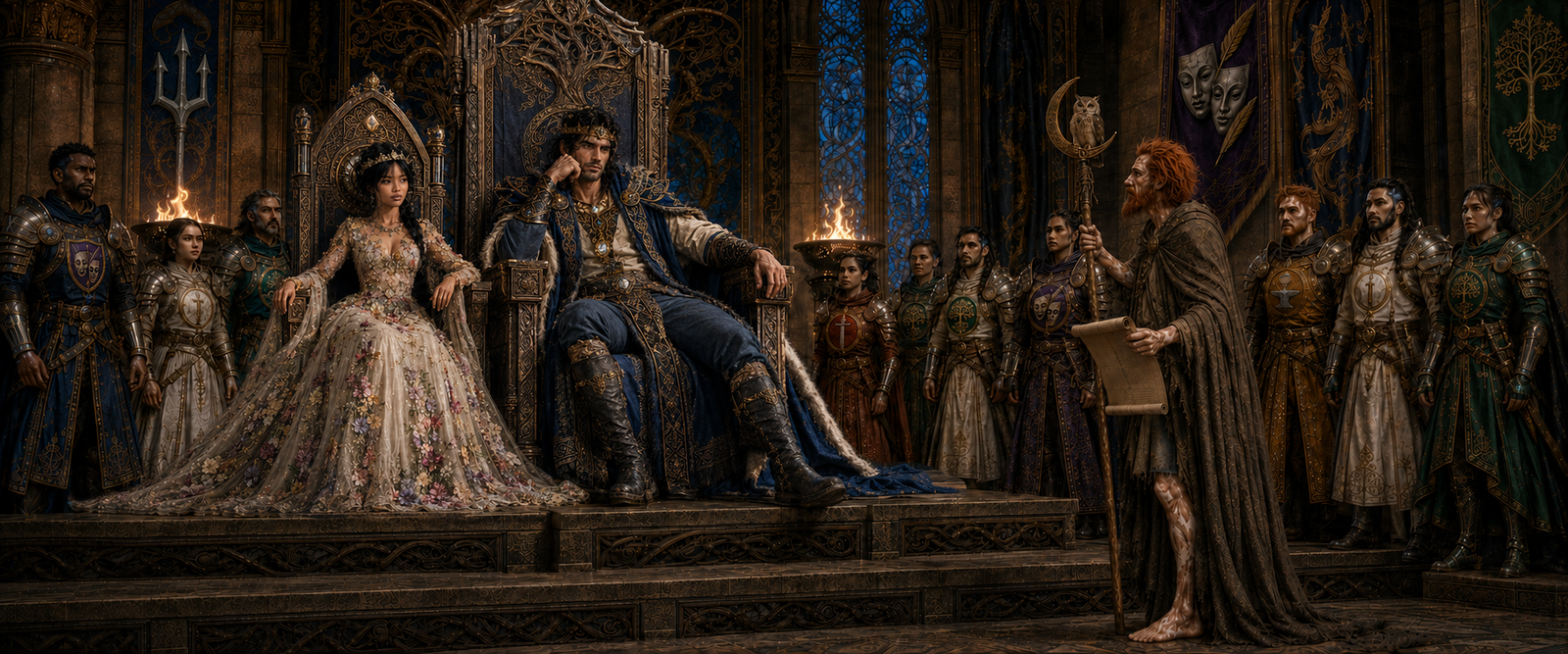
Although King Arthur Pendragon XI is Avalon’s sovereign, the kingdom’s final authority is Merlin. This is neither a carefully guarded constitutional secret nor a subject upon which the court maintains a convincing pretence. Merlin openly complains about Arthur’s decisions, interrupts royal proceedings and publicly berates the King whenever he believes another Pendragon has made an avoidable mistake.
Arthur accepts this with varying degrees of patience. He may argue, ignore the old wizard or look pointedly bored, but he understands that Merlin’s counsel carries the accumulated experience of every Pendragon reign. When a matter threatens Avalon at its deepest level, Merlin’s judgement is final.
Their relationship is less that of king and adviser than grandson and overbearing grandfather. Merlin has loved every Pendragon as though they were his own child, although he expresses that affection through relentless correction, unsolicited instruction and extremely loud disapproval. He is protective, proud and frequently obnoxious—the sort of parent who considers public embarrassment a legitimate teaching method.
Queen Candice frequently serves as referee when Arthur and Merlin truly go toe-to-toe. She has little patience for royal stubbornness or wizardly theatrics, and neither man is inclined to argue with her once she has made herself clear. According to Merlin—who considers himself something of an authority on dangerous tempers—Candice has by far the worst of the three.
The same ancient relationship is already being forged with Arthur and Candice’s son, Prince Arthur Pendragon XII. Fondly known as “Arty,” the nine-year-old heir is officially under Merlin’s governance, as tradition requires of every Pendragon heir. Arty is surly, strong-willed and thoroughly unimpressed by Merlin’s authority. Merlin, having raised generations of equally stubborn Pendragons, is entirely unimpressed by Arty’s objections.
For all their quarrelling, the bond between them is absolute. Merlin would overturn the world to protect the Pendragons, while Arthur and Candice trust him more completely than they trust any law, council or institution. Their arguments are not signs of divided rulership, but the familiar noise of Avalon governing itself: the King bearing the Crown, the Queen keeping both King and wizard in order, and ancient Merlin preparing yet another reluctant Pendragon to inherit it.
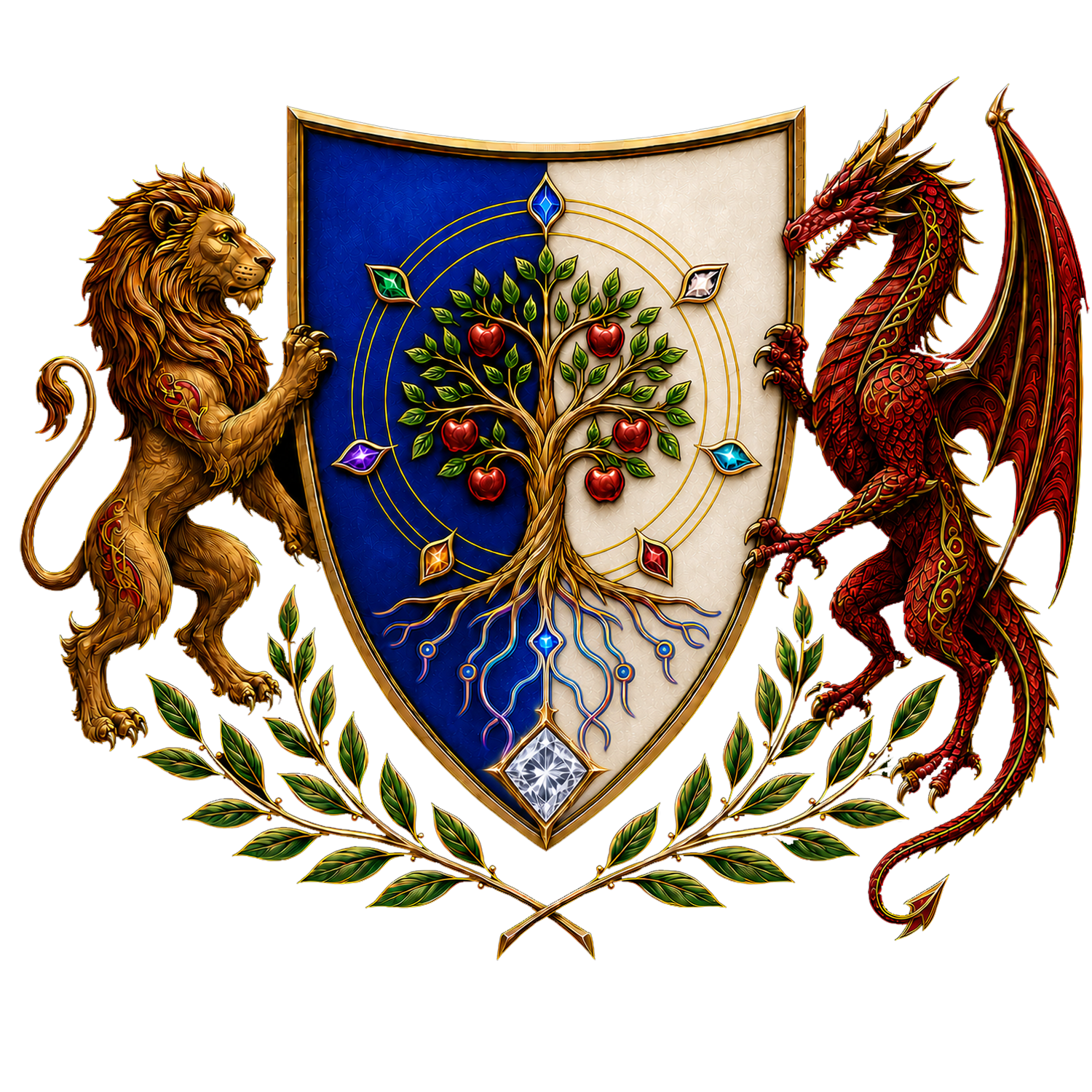
The Flag and Great Arms of Avalon
Wherever the Great Arms are raised, Avalon is claiming responsibility. It may promise aid, announce a magical quarantine or warn that Avalon intends to intervene. Foreign rulers do not always appreciate the distinction.
At a glance

Recommendations
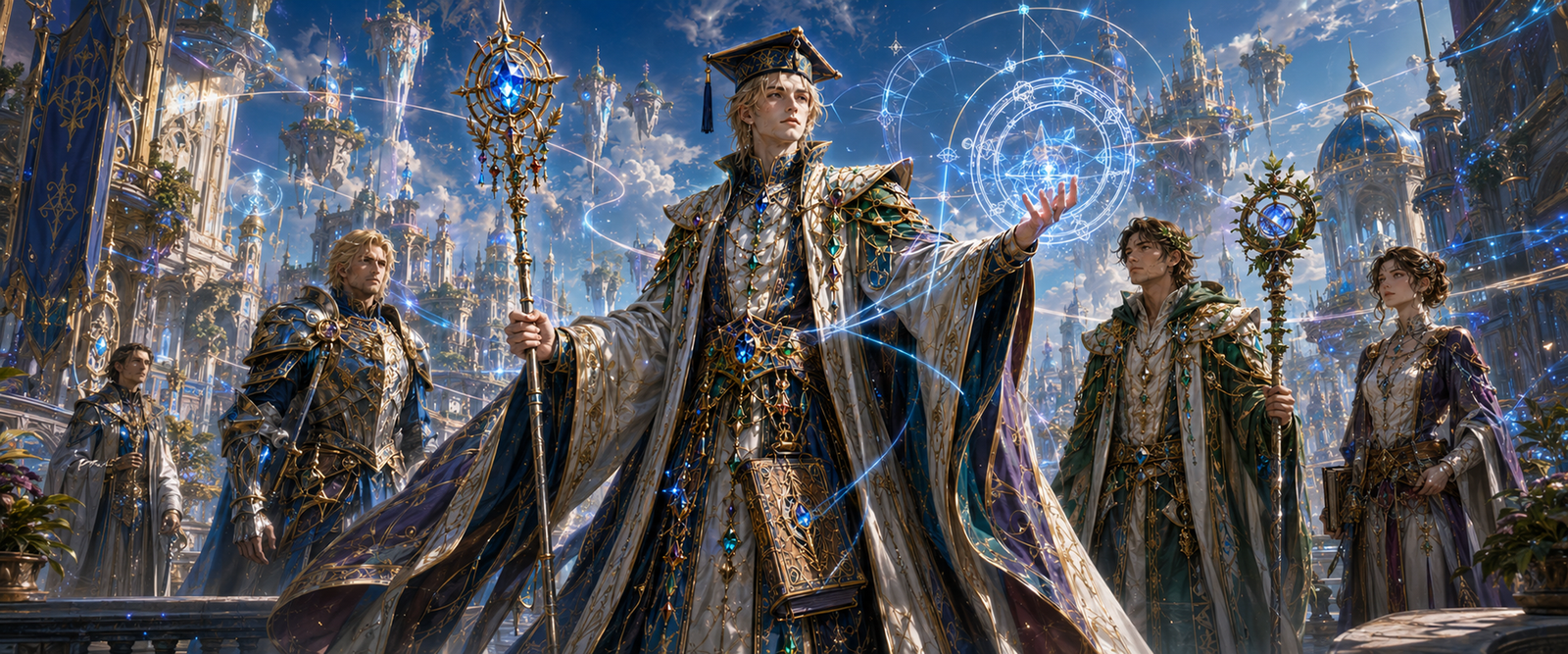
The Caster is the recommended Archetype for an Avalonion character. High Magic is the recommended Tradition, reflecting Avalon’s disciplined, multidisciplined approach to supernatural power. Féth Fíada is the recommended power Discipline, as it expresses the Avalonion ability to perceive, influence and redirect the world’s leylines.
These are recommendations rather than restrictions. Avalonions may follow other Archetypes, Traditions and Disciplines where the character concept and campaign allow them.
Avalonion Rank at Character Creation
An Avalonion character may begin with Rnk-Knight of the Round: 1 or Rnk-Druid: 1 where the Narrator and campaign permit that authority.
Magisterial Rank works differently. Only a Caster following the High Magic Tradition may hold the title of Magister. A Magister’s Rank is exactly equal to the number of distinct magical Disciplines they have learned. A character who knows three Disciplines is therefore recorded as Rank-Magister: 3 and is described within the world as a Magister of the Third Rank.
Other Casters and non-Caster officials may serve within the Magisterium, but they do not possess Magisterial Rank unless they meet these requirements.
Uplifted Slun cannot wield magic and therefore cannot become Magisters, but they are fully playable Avalonion citizens with their own unusual abilities.

Why Avalonions are worth playing
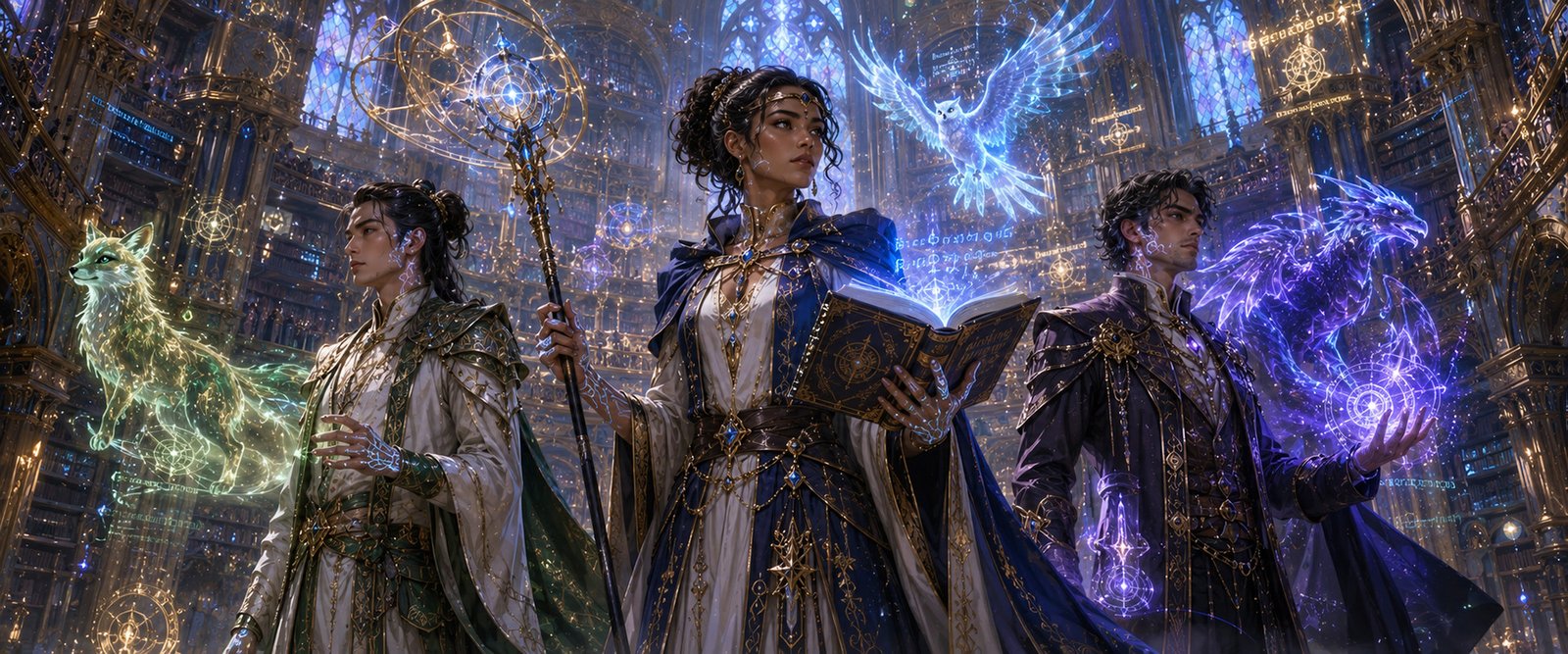
Avalonions are ideal for players who want exceptional magical versatility, political authority, difficult responsibilities and direct involvement in the supernatural affairs of the world. They excel at magical investigation, ritual control, diplomacy, arcane engineering and the containment of dangers that other practitioners cannot safely approach.
Playing an Avalonion also means carrying the reputation of Avalon. Other peoples may respect your knowledge while distrusting your motives. Independent spellcasters may see you as an interfering officer of a foreign power.
Governments may request your assistance during a magical crisis and then demand that you leave once the danger has passed.
An Avalonion character must decide whether Avalon’s authority is genuinely necessary, dangerously overreaching or both at once. You possess the power to impose order upon magic, but must live with the consequences of deciding whose definition of order prevails.

Appearance

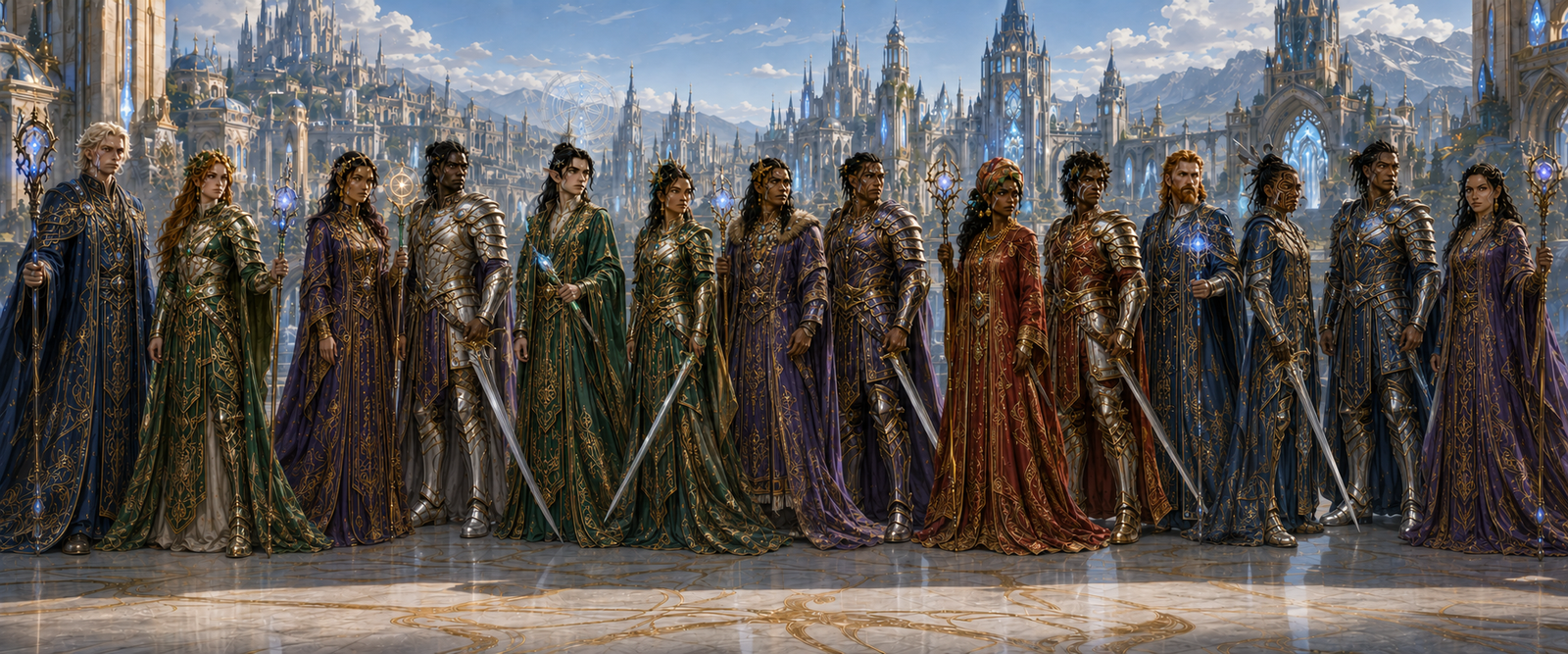
Avalonions appear outwardly human, but no single human appearance defines them. Their ancestry encompasses peoples and cultures drawn from many periods and realities, particularly those touched by the historical reach of the British Empire.
Avalon’s fourteen principal ethnic heritages are British or Anglo-Celtic, Irish, West African, South Asian, East Asian, Southeast Asian, First Nations, Polynesian, Caribbean, Australian Indigenous, Scottish Highland, Māori, Pacific Islander and South African multi-heritage. Centuries of movement, marriage and clan adoption have created innumerable mixed identities alongside these communities.
Skin tones range from pale and olive through bronze and deep brown to near-black. Hair may be straight, wavy, tightly coiled, braided, cropped, silvered, naturally red, black, blond or brown, or deliberately altered through ritual dyes and minor enchantments.
What visually distinguishes an Avalonion is the result of the Eux du Lac. Faint mana-veins lie beneath the skin, most visibly around the hands, neck, temples and eyes. These veins glow when magic passes through the body, producing patterns of blue, violet, green, gold, white or red arcane light.

Homeland
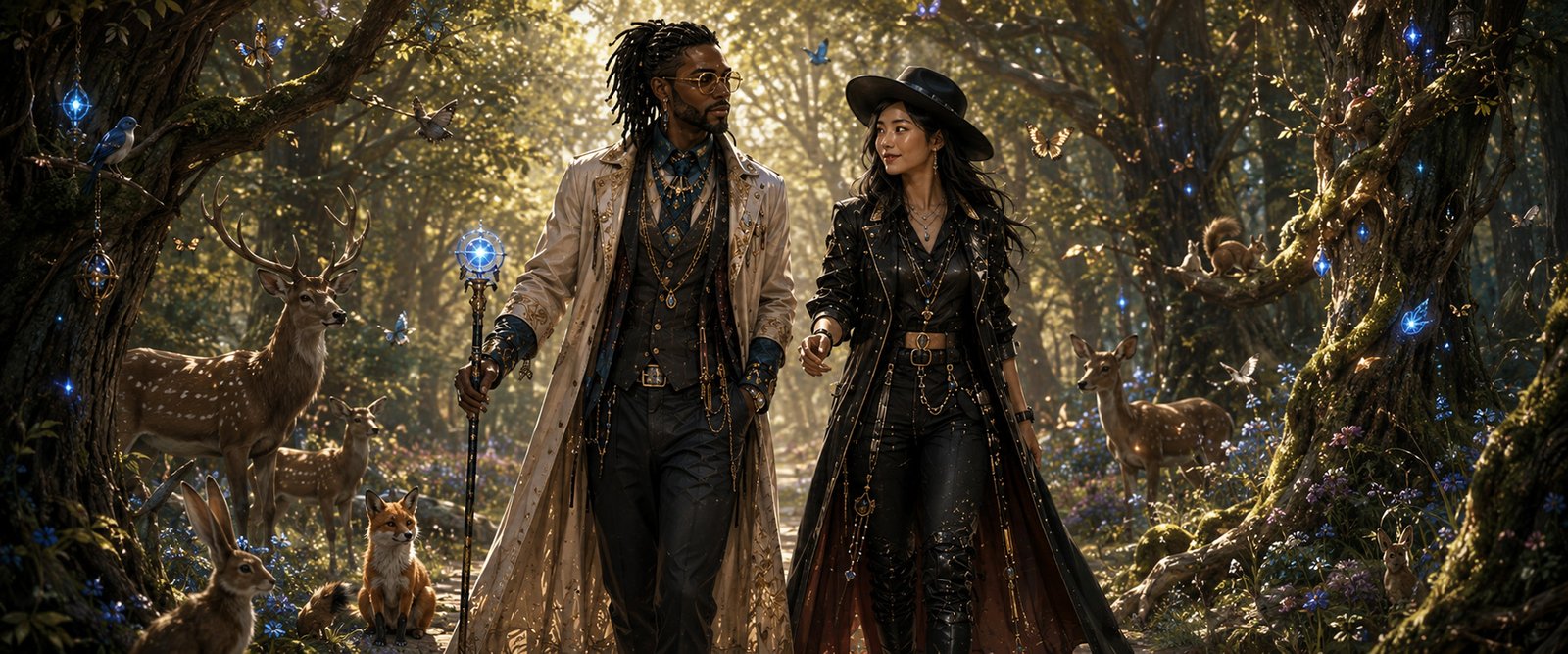
Avalon – or Avalonia, as outsiders commonly call it—is a verdant island in the Ostlantic Ocean, off the mid-western coast of Tzantzaria. Avalonions prefer the island’s ancient name, which means the Isle of Apples.
Avalon is a land of mirror-like lakes, green meadows, managed forests, orchards, white-stone cities and magical architecture. Towers of pale stone and enchanted glass rise above waterways carrying controlled currents of mana. Runes illuminate roads, bridges and public buildings, while ley-powered systems provide transport, communication, sanitation and protection.
At the island’s centre lies the Lake of the Lady, the source of the waters used in the Eux du Lac. The lake touches the leyline network crossing the WarpedEarth and extending through every plane, realm and dimension in which supernatural power exists. Avalonions are the only people capable of consciously perceiving, influencing and directly manipulating those currents.
The Lady of the Lake is the ancient guardian and living authority associated with these waters. She is a powerful ally of Merlin, but she also answers to him in matters affecting Avalon and the wider supernatural balance.
Avalon’s principal cities include Caer Arcturus, a centre of magical government and scholarship; Lacendun, built around sacred waters and druidic institutions; and Euxbridge, whose workshops, transit gates and mercantile houses connect Avalon with the wider world.
Significant Avalonion populations also inhabit magical colleges, Magisterium offices, Council embassies, fortified ley-sanctums and protected enclaves across the WarpedEarth.

Who Are They?
Avalonions are the most powerful organised magic-users in the WarpedEarth. Every human Avalonion undergoes the Eux du Lac, which restructures the body by creating mana-veins capable of safely channelling enormous supernatural forces.
Avalonions are not bound to the leylines. They are the only people able to directly perceive, influence and manipulate them. This distinction is fundamental: the leylines do not command Avalonions, but Avalonions possess the knowledge and physical capacity to alter their flow.
Most supernatural practitioners can safely master only one discipline. Combining incompatible traditions risks corruption, madness, supernatural backlash or death. Avalonions can survive exposure to several magical Disciplines, while those who follow the High Magic Tradition may qualify as Magisters. A Magister’s recognised Rank reflects the number of distinct Disciplines they have learned and therefore the breadth of magical dangers they are trained to understand.
Avalonion society treats magical power as a public responsibility. Through the Offices of the Magister, Magisters and other members of the Magisterium inspect magical institutions, investigate magical crimes, contain supernatural disasters and regulate dangerous magical practices. The most senior Magisters may be appointed as Prime Magisters to lead individual Offices.
A Magister travelling beyond Avalon may be accompanied by a Knight of the Round, members of a personal retinue or specialists appointed by one of the Offices. The Magister provides magical breadth, institutional authority and knowledge of supernatural law, while companions contribute protection, investigation, diplomacy, local expertise or other abilities required by the assignment.
Every Avalonion who completes the Eux du Lac also receives a Familiar formed from living light. These intelligent companions can communicate, perceive magical disturbances and assist with ritual work. A Familiar is not a pet or servant, but a lifelong supernatural counterpart.

Look and Feel
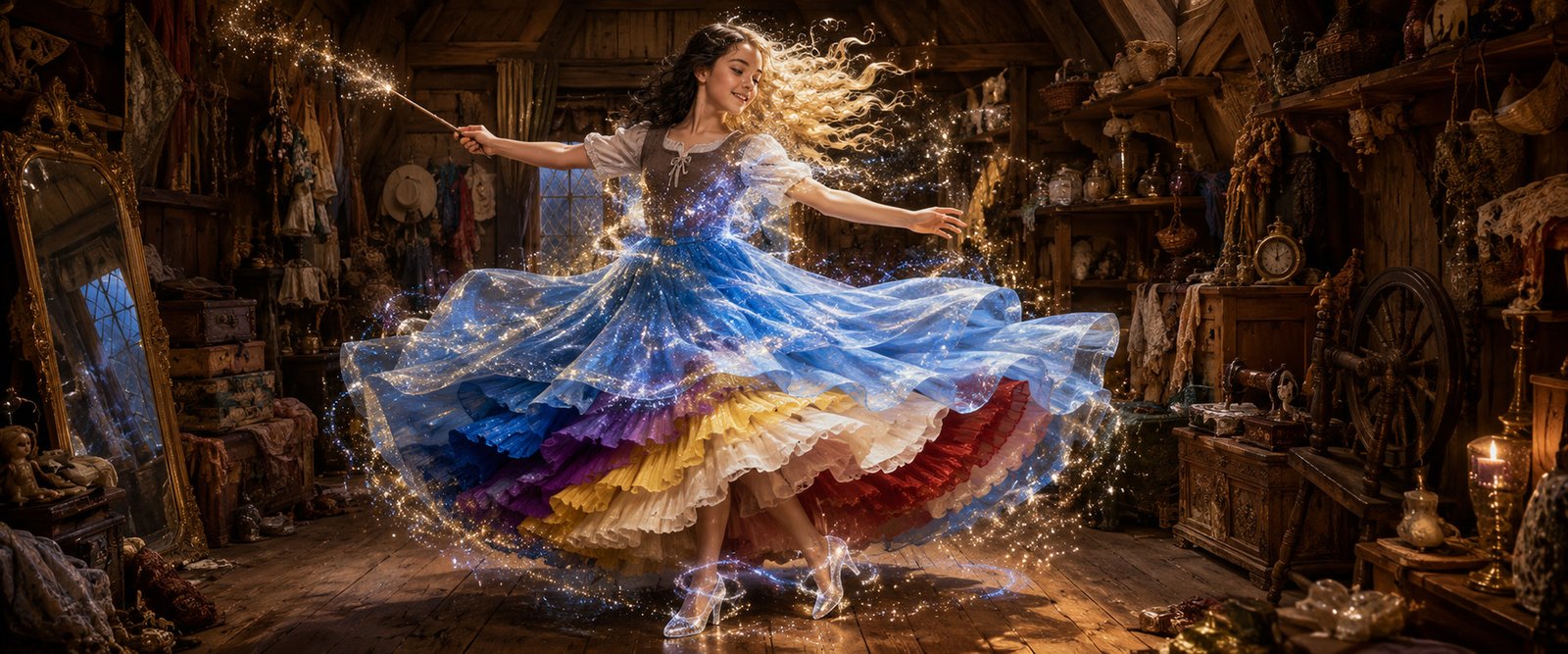
At first glance: Most Avalonions resemble ordinary humans drawn from numerous ethnic and cultural backgrounds. Their composure, formal clothing and faintly glowing mana-veins usually reveal their identity.
Build: Avalonions possess normal human ranges of height, weight and body shape. Magic does not make every Avalonion tall, slender or physically beautiful.
Skin and mana-veins: Their skin reflects the full diversity of human complexions. Mana-veins are normally faint but become increasingly visible when the Avalonion casts, resists or contains magic.
Hair: Avalonion hairstyles vary enormously between communities and clans. Braiding, jewellery, enchanted pins, ritual dyes and threads bearing tiny runes are common.
Sound: Avalonions speak in countless regional accents. Formal education tends to give officials precise vocabularies and controlled speech, particularly when discussing magic or law.
Attitude: Most Avalonions are raised to remain calm around supernatural danger. To outsiders this composure can appear cold, arrogant or infuriatingly self-assured.
Fashion: Layered robes, tailored coats, engraved armour, formal sashes and rune-thread embroidery are common. Channelling jewellery helps control magic while displaying education, office, clan and authority.
Presence: An Avalonion often appears composed rather than relaxed. Even ordinary citizens have been taught that uncontrolled magic can destroy lives, cities and sometimes reality itself.
History and Culture
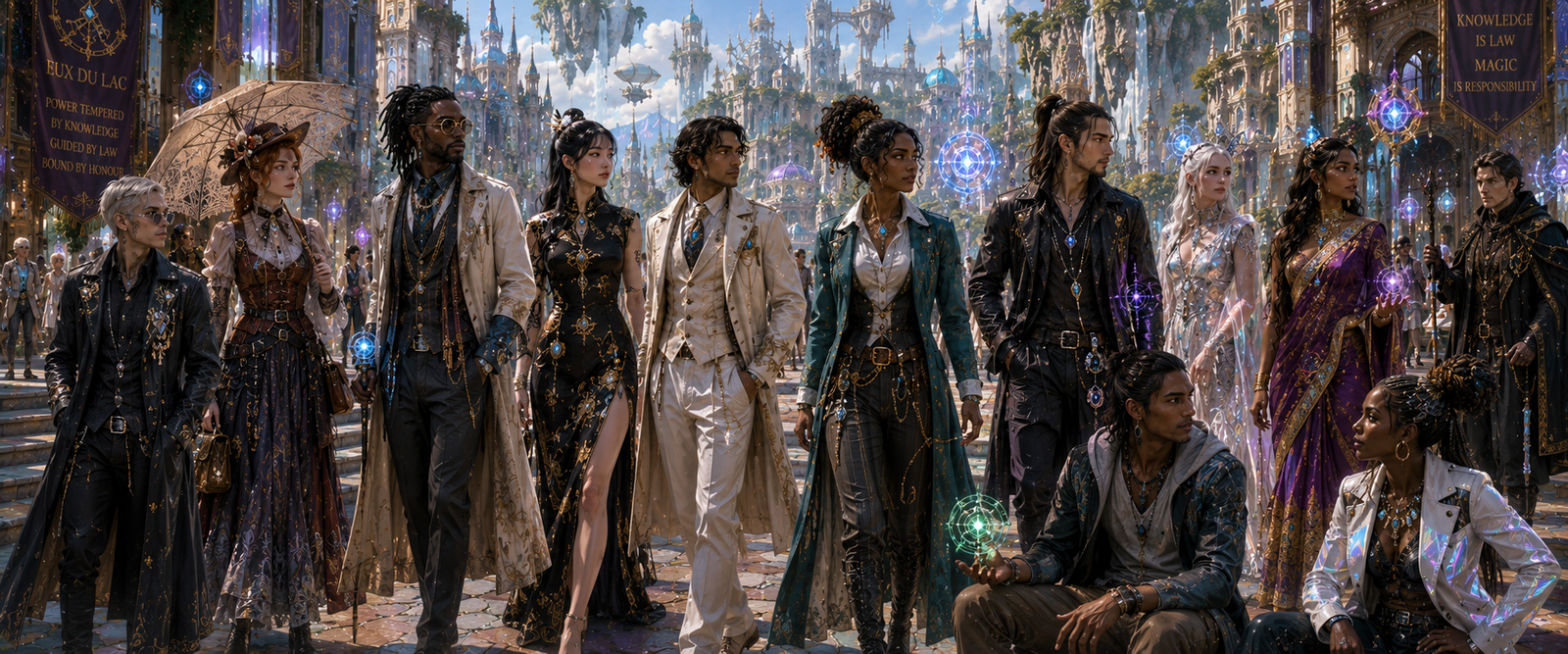
Avalon developed from communities drawn together from different periods, cultures and realities. These peoples were united not by ethnicity but by citizenship, magical transformation and the institutions created to control the extraordinary powers granted by the Eux du Lac.
The result is one of the most culturally varied nations in the WarpedEarth. Avalon’s fourteen principal ethnic traditions remain visible in its languages, clothing, food, music, ceremonies and family structures. Clan identity overlays this ancestry without replacing it.
Magic shapes every aspect of Avalonion civilisation. Law is recorded through oath-bound rituals. Public buildings are protected by responsive wards. Roads and vessels use ley-powered systems. Hospitals treat both physical and supernatural injuries. Schools teach magical safety alongside ordinary literacy.
Education is taken extremely seriously. Avalonion children are taught history, law, magical theory, emotional discipline and the consequences of supernatural negligence. Even citizens who never become professional spellcasters understand the principles of magical containment and emergency response.
Avalon’s government rests upon an uneasy balance between the Crown, the Offices of the Magister, the Druids of Merlin, the Knights of the Round, the seven clans and the nation’s scholarly institutions. Each considers itself essential to the survival of Avalon.
Abroad, Avalonion influence is enormous. Its specialists stabilise damaged leylines, train foreign practitioners, investigate magical disasters and maintain infrastructure used by other nations. Avalon also exports enchanted objects of exceptional quality and advanced magical education, while importing food, rare reagents and raw materials required by its artificers.
This influence produces both gratitude and resentment. Avalonions believe that magical power must be controlled by people capable of understanding it. Their critics argue that Avalon has appointed itself judge, gaoler and gatekeeper over a power belonging to the entire world.
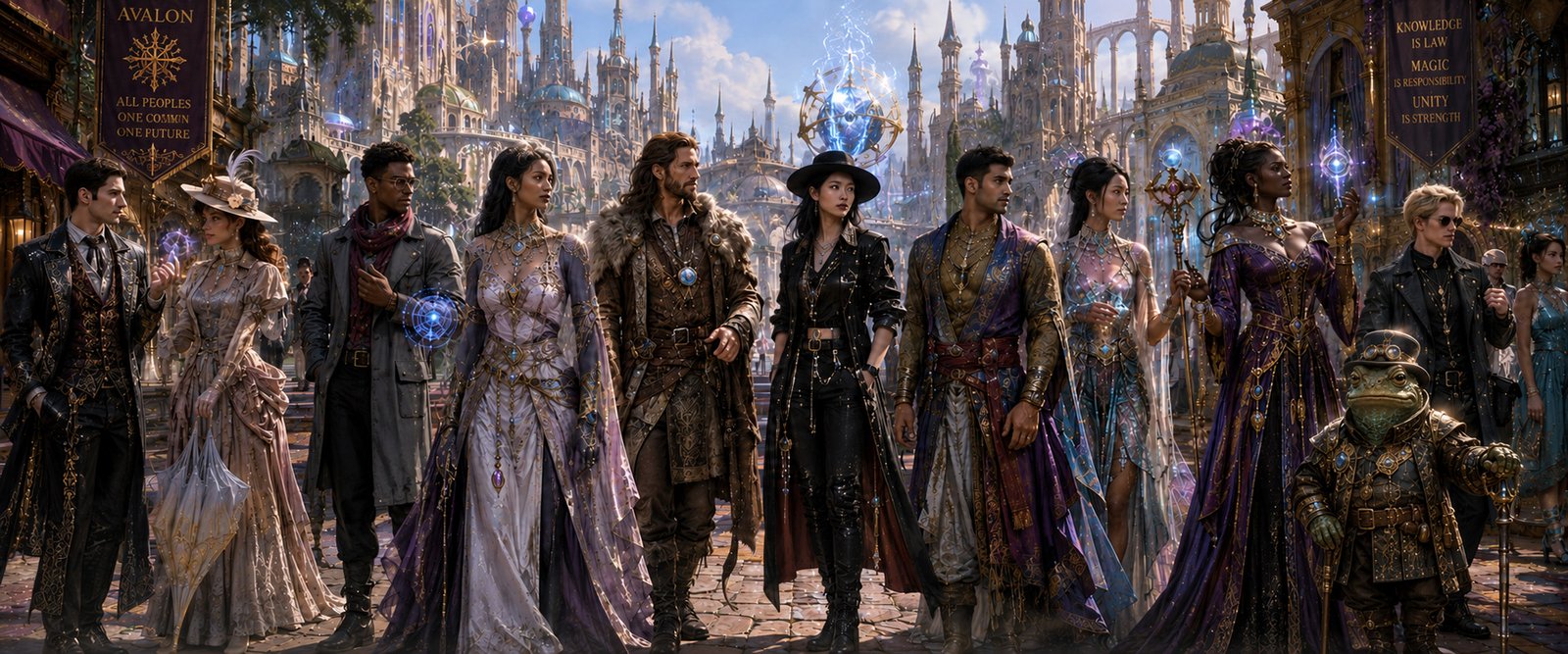
Avalonion everyday non-formal fashion is wonderfully eclectic. It draws inspiration from almost every culture that has ever reached the island, blending styles from different peoples, centuries and even worlds. Edwardian elegance mingles effortlessly with Dark Age practicality, while contemporary tailoring sits comfortably beside medieval cloaks, ceremonial robes and fantastical armour. The countless races that now call Avalon home have each added their own distinctive fashions, materials and ornamentation. Layered over all of this is Avalon’s innate love of high fantasy, where enchanted textiles, luminous embroidery and magically crafted jewellery are everyday expressions of personal style. The result is a culture where fashion has no single era, only individuality.

The McGuffin
The McGuffin is publicly described as a rare but severe magical illness caused when an Avalonion pushes their already considerable abilities too far. Its supposed symptoms include confusion, displaced memories, unfamiliar behaviour, radical personality changes and an inability to recognise one’s own history.
Under a Council of Races mandate, anyone believed to be suffering from the McGuffin must be entrusted to a Magister, a Knight of the Round, a Druid of Merlin or, failing these, any responsible Avalonion citizen.
That official explanation is a deliberate deception.
Merlin created the McGuffin as a legal and magical fiction to protect people carried into the WarpedEarth from other realities by The Typhon. Their memories are not false, nor are their personalities the result of magical illness. They remember lives lived elsewhere.
By identifying such a displaced person as an Avalonion suffering from the McGuffin, Avalon can claim responsibility for them, remove them from danger and offer them citizenship and a place in Avalonion society. What outsiders understand as “treatment” is often a combination of protection, education, supernatural surgery and assistance adapting to an entirely different reality.
The truth is known within Avalon but remains a carefully guarded secret elsewhere. Revealing it would endanger displaced people, undermine the Council mandate and provoke nations unwilling to surrender useful, knowledgeable or politically valuable strangers into Avalonion care.
Avalon’s Three Great Offices
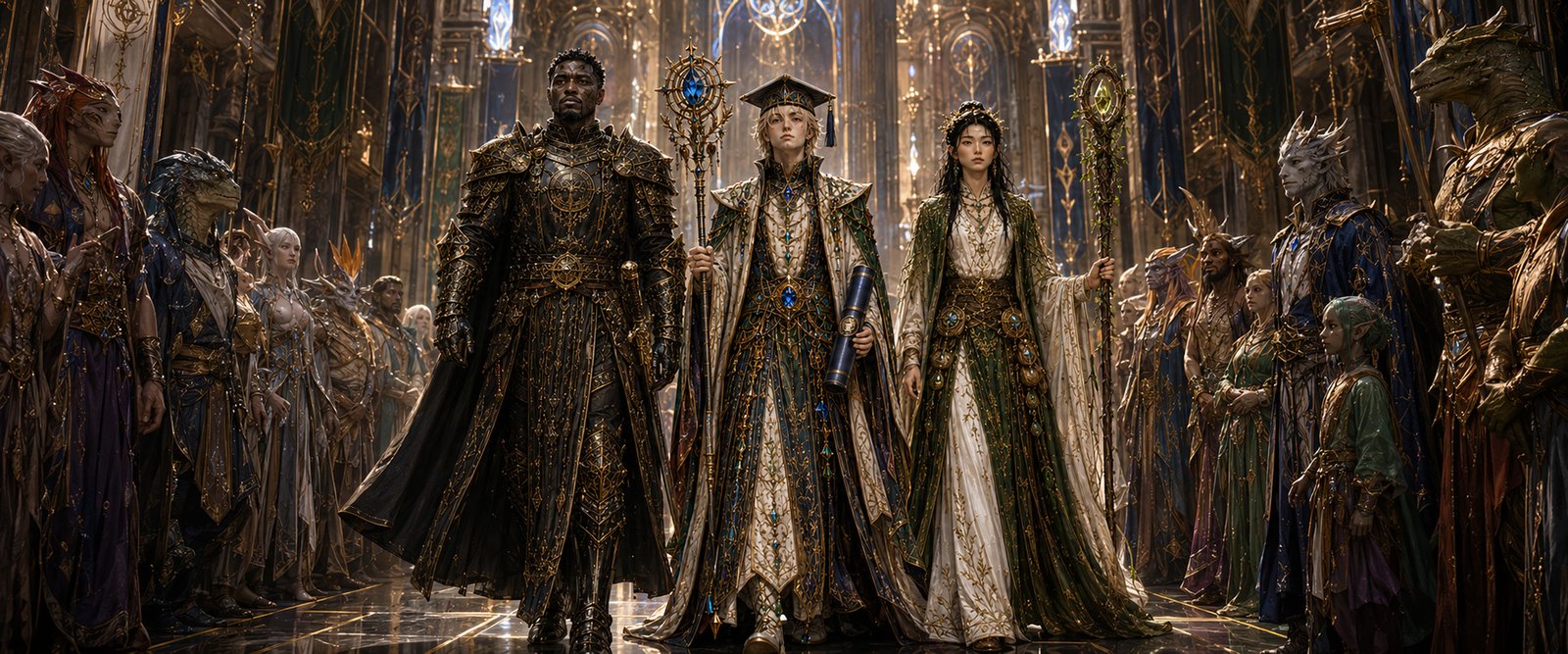
The Offices of the Magister, the Knights of the Round and the Druids of Merlin represent three distinct forms of Avalonion authority.
Magisters serve through the Offices of the Magister. Only a Caster following the High Magic Tradition may hold Magisterial Rank, which is equal to the number of distinct magical Disciplines they have learned. Experienced Magisters may be appointed as Prime-Magisters to lead individual Offices or undertake exceptional responsibilities.
Knights of the Round answer to the King and exercise martial and protective authority. Druids answer to Merlin and act in matters concerning the Lake, leylines, spirits and supernatural balance.
An Avalonion may begin with Knight or Druid Rank only where the Narrator and campaign permit that authority. These offices grant standing, access and jurisdiction rather than additional supernatural abilities.
The Offices of the Magister
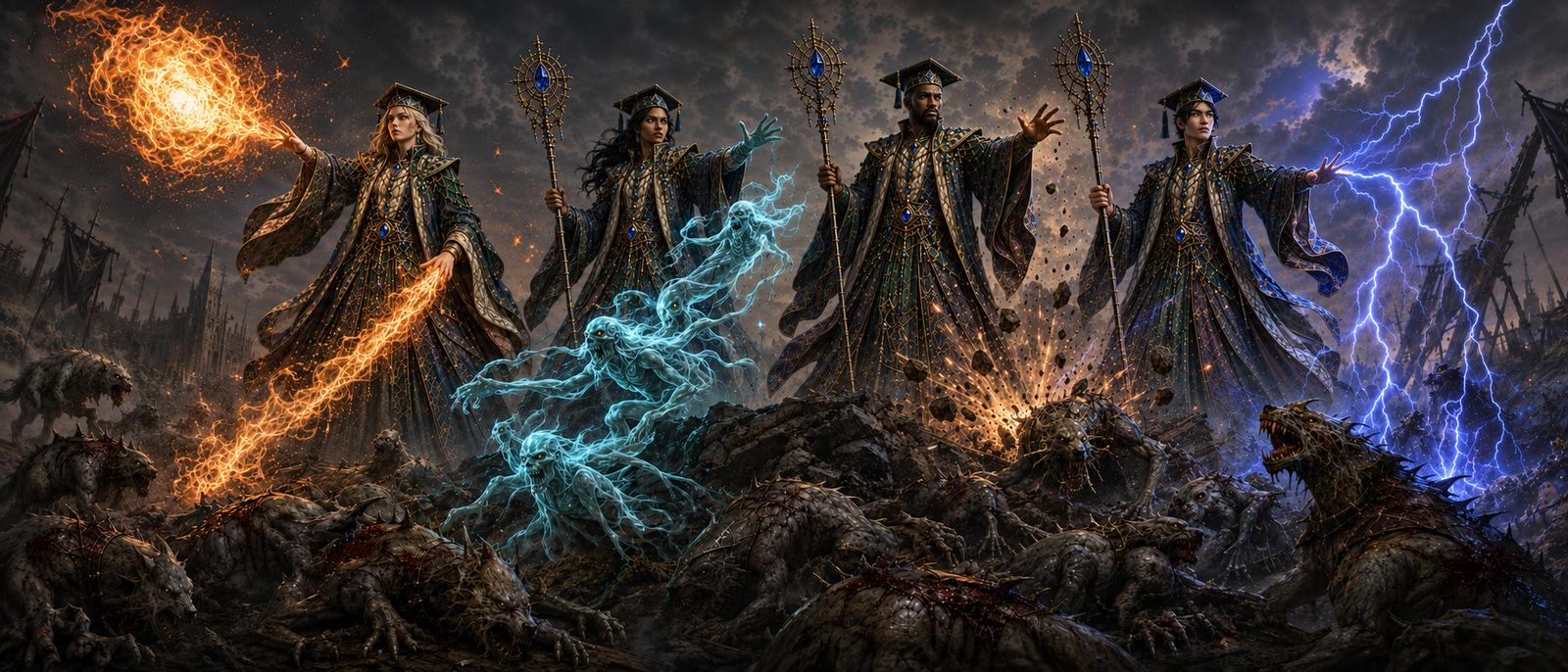
The Offices of the Magister
The Offices of the Magister are an Avalonion institution responsible for regulating, investigating and containing dangerous magical activity. Although based in Avalon and governed under Avalonion authority, the Offices possess an international mandate recognised through treaties, inspection agreements and sanctioned intervention rights across much of the WarpedEarth.
Collectively, the Magisters, officials, investigators, specialists, retainers and other personnel serving within the Offices are known as the Magisterium.
The Offices exist because uncontrolled magic has repeatedly destroyed settlements, kingdoms and civilisations. Rogue rituals, reckless leyline manipulation, dimensional breaches, magical plagues, corrupted foci, forbidden Disciplines and supernatural contamination are considered too dangerous to be left entirely to local authorities.
Some nations regard the Offices as essential protection against magical catastrophes. Others regard them as an extension of Avalonion power operating beyond Avalon’s borders. Both views contain some truth.
The Magisterium
The Magisterium is the collective body of people serving within the Offices of the Magister. It includes Magisters, their official retinues, investigators, inspectors, scholars, wardens, administrators, legal officers and other specialists entrusted with carrying out the work of the Offices.
Not every member of the Magisterium is a Magister. Many serve as researchers, witnesses, healers, record-keepers, containment specialists, diplomatic representatives or members of a Magister’s personal staff. Together, they provide the knowledge, authority and practical support required to investigate magical threats and enforce supernatural law.
The Badge of the Magisterium represents the authority of the Offices as a whole. Its combined clan regalia declares that the Magisterium serves Avalon collectively rather than any single Great Clan.
Magisters
Magisters are recognised officials empowered to investigate dangerous magical activity, inspect supernatural institutions and enforce the laws governing magical practice. They may question practitioners, gather evidence, secure hazardous locations, confiscate dangerous materials and bring offenders before the appropriate Avalonion or international authority.
Magisters also inspect and grade magical colleges, guilds, temples, laboratories, ritual houses and private schools. These institutions are judged according to their competence, safety, ethical conduct and ability to contain the forces they employ.
A favourable assessment brings legitimacy, international recognition and continued access to Avalonion magical infrastructure. A poor assessment may result in compulsory reforms, restricted teaching rights, sanctions, quarantine or closure.
Prime-Magisters
Prime-Magisters are the most senior and accomplished Magisters. They possess exceptional knowledge of magical law, multiple forms of supernatural practice and the dangers created when incompatible powers are combined.
A Prime-Magister may lead investigations, command Magisterium personnel, impose recognised sanctions and act as Avalon’s principal authority during a magical crisis. The extent of that authority depends upon the Prime-Magister’s Rank, jurisdiction and the seriousness of the threat.
Even a newly recognised Prime-Magister is not merely an adviser. Their office carries genuine legal and institutional force. Higher Rank represents greater trust, broader jurisdiction, increased independence and access to more severe sanctions.
Authority and Accountability
The authority of the Offices is extensive, but it is not unlimited. Magisters remain answerable to the laws and governing institutions of the Offices, to Avalonian law and ultimately to Merlin in matters threatening Avalon or the fundamental stability of magic.
A Magister who abuses their authority, falsifies evidence, pursues a private grievance or recklessly endangers others may be investigated by fellow members of the Magisterium. Rank grants responsibility and recognised power; it does not provide freedom from scrutiny.
Foreign governments often regard the Offices with a mixture of gratitude and resentment. Their Magisters may prevent catastrophes that local authorities could never contain, but they also represent Avalon’s claim that dangerous magic cannot always be left under local control.
Magister Rank
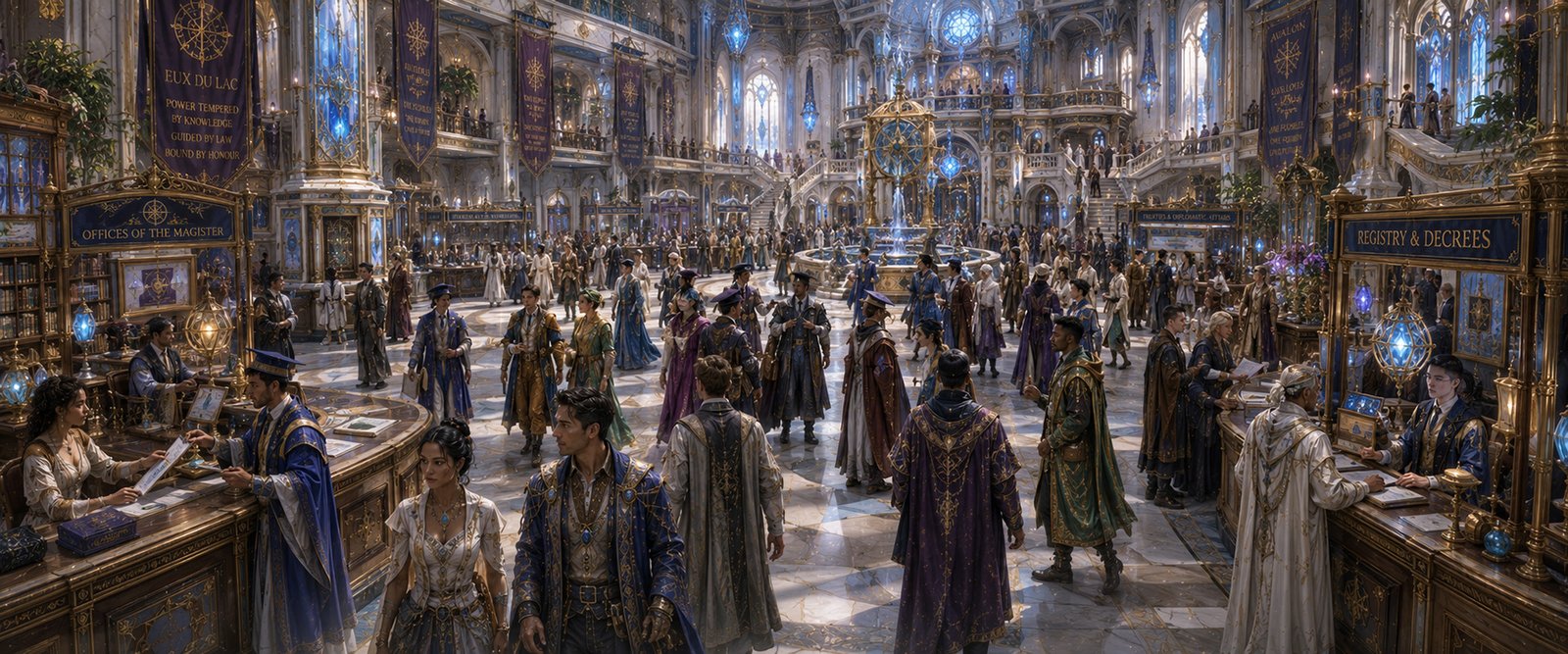
Rnk-Magister measures recognised standing within the Magisterium and the wider institutions of Avalonion magic. Even at Rank 1, a Prime-Magister possesses substantial recognised authority to investigate magical misconduct, enforce supernatural law and inspect magical establishments. Higher Rank increases the weight of that authority, the severity of punishments they may impose and the institutions expected to accept their judgement.
Knights of the Round
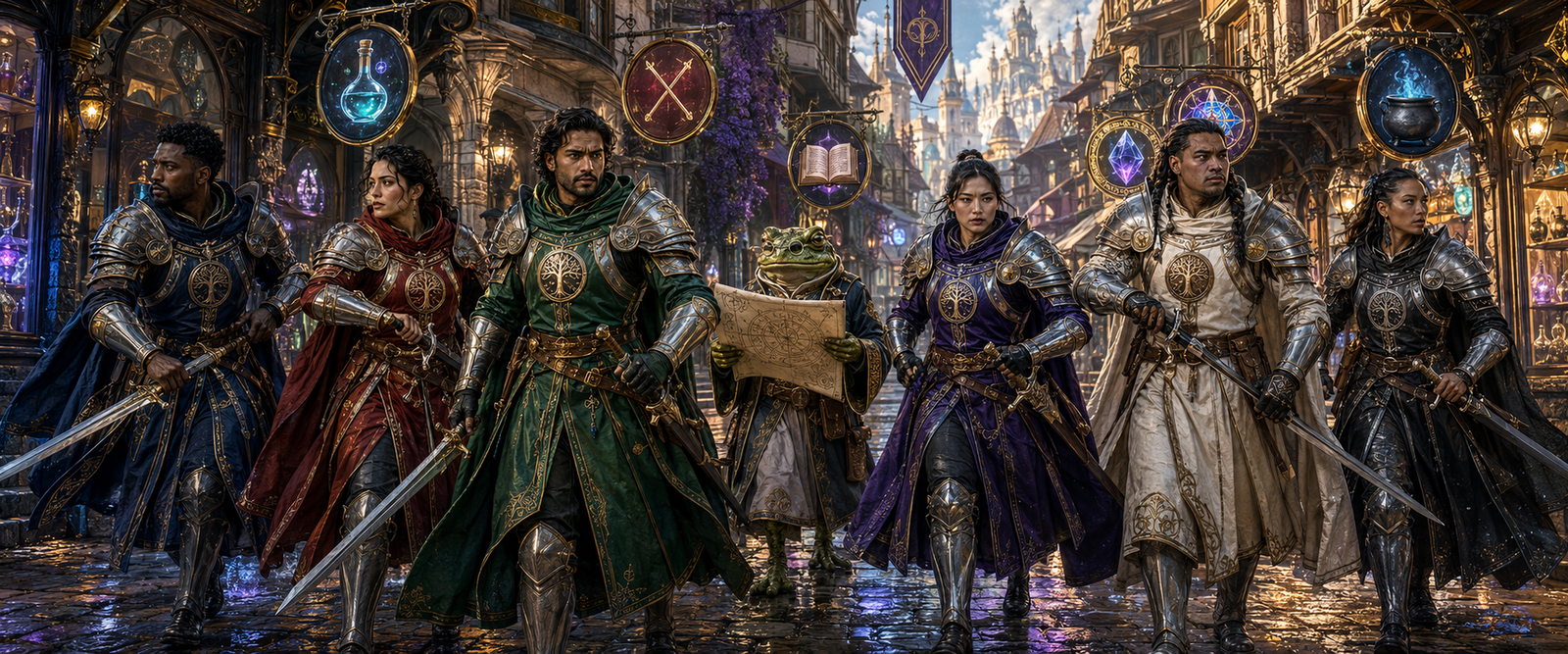
The Sword and Shield of Avalon
The Knights of the Round are Avalon’s foremost champions and the principal enforcers of its supernatural laws. They defend Avalon, protect its representatives and confront magical dangers that cannot be resolved through scholarship, diplomacy or ritual alone.
A Knight is far more than an armoured warrior. Each is expected to possess exceptional judgement, courage and self-control. Their responsibilities include investigating magical crimes, securing dangerous artefacts, confronting rogue practitioners and containing supernatural catastrophes before they can spread.
Although many Knights emerge from Clan Kharad’n, the order accepts worthy individuals from every Avalonion clan and community. Appointment is not determined by ancestry, magical discipline or social position. It is reserved for those who have repeatedly demonstrated that they can be trusted with extraordinary authority.
Answering to the King
The Knights of the Round answer to the King of Avalon alone. They are not subordinate to the Prime-Magisters, the clans, Avalon’s civil authorities or the Council of Races.
This grants them exceptional autonomy. A Knight may travel, investigate and act in Avalon’s name without first obtaining permission from a lesser Avalonion institution. They are expected to exercise their own judgement and accept personal responsibility for the consequences.
A Knight cannot excuse a reckless decision by claiming merely to have followed the orders of another official. Each Knight is accountable directly to the King and is expected to place Avalon’s safety, honour and international obligations above ambition, clan loyalty and personal friendship.
Authority Beyond Avalon
The authority of a Knight of the Round extends far beyond Avalon’s shores. Through ancient agreements upheld by the Council of Races, every Knight possesses worldwide authority to investigate, confront and contain magical deviance.
A Knight does not require a local invitation or a specific Council mandate before acting. Their office carries a standing authority recognised across the WarpedEarth. If a Knight encounters rogue sorcery, a dangerous magical artefact, supernatural corruption or any other immediate arcane threat, they may intervene on their own judgement.
Local rulers and officials may object to a Knight’s presence, methods or conclusions, but they cannot easily deny the authority of the office. Even the Council of Races will normally defer to a Knight’s accepted expertise in magical security, hostile supernatural activity and emergency containment.
This power makes the Knights indispensable during magical crises – and deeply unsettling to governments accustomed to controlling everything that occurs within their own borders.
Knights and Prime-Magisters
Prime-Magisters possess standing worldwide authority in matters of magical law. They may investigate suspected magical misdemeanours and crimes, inspect magical institutions and intervene where supernatural practice endangers others or breaches recognised standards. Their authority is institutional rather than martial, but it does not depend upon a separate local invitation or case-specific mandate.
A Knight of the Round possesses a different but equally inherent authority. Knights act through the Crown’s martial and protective jurisdiction, while Prime-Magisters act through the Arcanum Thaumaturgica’s authority over magical practice, investigation and regulation.
Becoming a Knight of the Round
An Avalonion may begin with Rnk-Knight of the Round: 1 as their single free Avalon-specific Rank. Characters who do not begin with it may earn the Rank later through play, when the Narrator judges that their actions, reputation and service justify the appointment.
Further Adds in Rnk-Knight of the Round must be earned through play. Each increase represents greater trust from the Crown, broader recognised jurisdiction and greater authority to act in Avalon’s name.
Knightly Rank does not replace an Archetype, Profession, Stunt, Technique or supernatural ability. It provides status and authority; actions taken under that authority still use the character’s normal abilities and linked Statistics.
What changes is their standing. A Knight gains immense status, worldwide authority and the right to act publicly in the King’s name. Avalonion institutions are expected to cooperate with them, foreign governments must take their pronouncements seriously and the Council of Races will ordinarily defer to their accepted expertise.
Diplomatic Immunity
Knights of the Round possess diplomatic immunity throughout the territories recognising the authority of Avalon and the Council of Races. Local authorities cannot casually arrest, prosecute or obstruct a Knight acting in an official capacity.
This immunity is not permission to act without consequence. A Knight answers directly to the King, and any serious accusation against one becomes a matter between the offended nation and the Crown of Avalon. Diplomatic immunity protects the Knight’s ability to perform their duty; it does not free them from accountability.
The Druids of Merlin
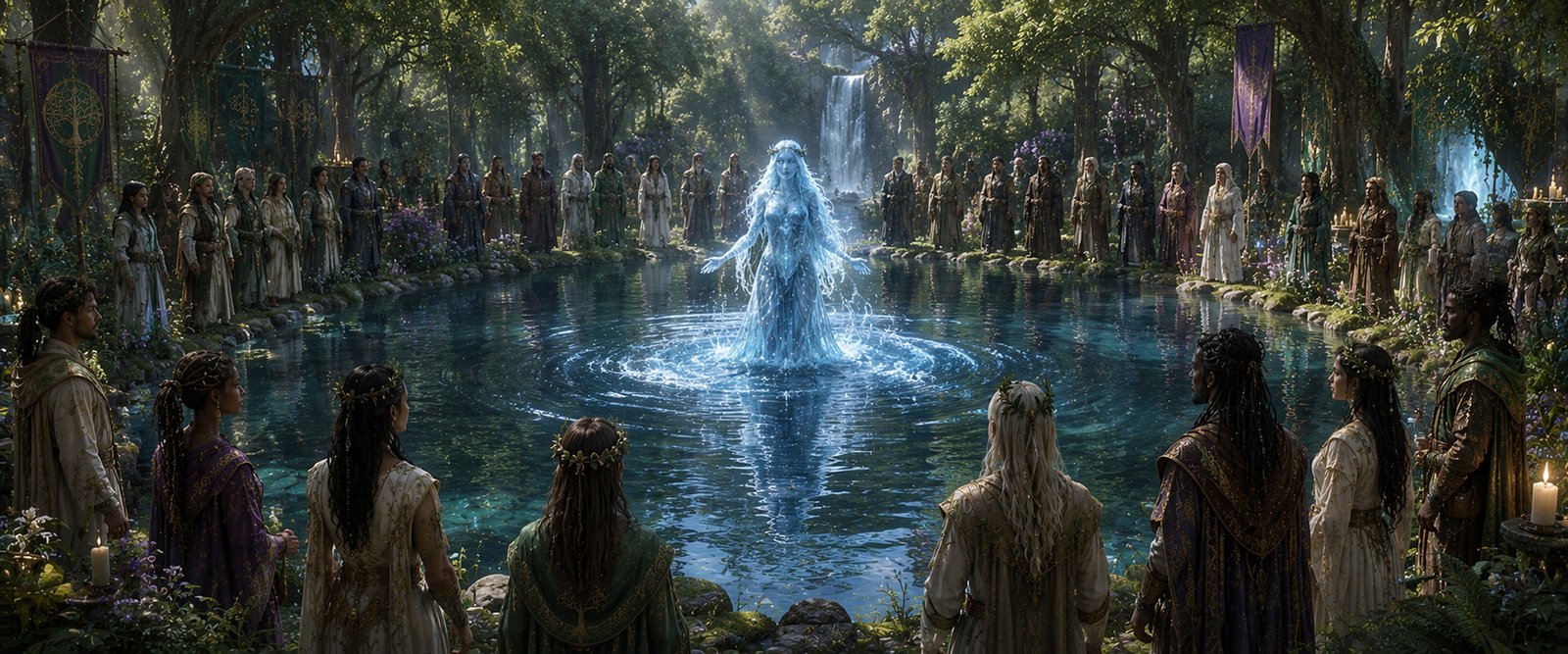
Guardians of the Lake and the Living World
The Druids of Merlin are the custodians of Avalon’s sacred places, supernatural environments and ancient magical relationships. Their greatest responsibility is the Lake of the Lady, whose waters are used in the Eux du Lac and whose depths touch every leyline crossing the WarpedEarth.
The Druids control access to the lake, oversee every sanctioned use of its waters and protect it against theft, corruption and interference. They understand that even a small quantity of this water could transform a living being, alter a magical environment or become a weapon of extraordinary power.
Answering to Merlin
The Druids answer to Merlin alone. They are not governed by the King, Prime-Magisters, clans, civil authorities or the Council of Races. Even Avalon’s Crown must respect their independence in matters concerning the Lake of the Lady, the Eux du Lac and the preservation of supernatural balance.
This position grants the Druids immense trust and freedom to act. They may cross political boundaries, enter endangered regions, negotiate with supernatural beings and intervene when magical activity threatens the balance between living communities and their environment.
A Druid is expected to consider consequences extending far beyond the immediate crisis. Their decisions may protect a spirit, forest or leyline at the expense of political convenience. They think in terms of generations, ecosystems and consequences that may not become apparent for centuries.
Authority Across the WarpedEarth
The authority of the Druids of Merlin is recognised throughout the WarpedEarth. Through the Council of Races, they possess standing authority to investigate and contain magical deviance wherever it threatens supernatural environments, living systems, spirits or the stability of the leylines.
Like the Knights of the Round, a Druid does not require a specific mandate before intervening. Their office itself provides the necessary authority. If a Druid discovers a corrupted leyline, spreading supernatural blight, displaced spirit or magically damaged environment, they may act immediately without waiting for permission from the Council or the affected nation.
Even the Council of Races will normally defer to a Druid’s accepted expertise in matters concerning magical ecology, sacred places, ancient spirits, the Eux du Lac and disturbances affecting the natural or supernatural balance.
This freedom frequently places Druids in conflict with rulers, merchants and communities whose immediate interests depend upon the very activity the Druid intends to stop.
The Work of the Druids
Where Prime-Magisters regulate the deliberate practice of magic, the Druids study its consequences for living things, spirits, landscapes and the supernatural foundations of the world.
They restore magically damaged land, investigate corrupted leylines, negotiate with ancient entities and protect creatures or communities threatened by uncontrolled supernatural change. During severe disturbances, they may establish protected territories, halt dangerous magical activity or order the removal of people and artefacts contributing to the threat.
Many Druids come from Clan Nantara, whose traditions of Spirit and Ancient Magic closely suit their responsibilities. Nevertheless, Merlin may recognise worthy candidates from any Avalonion clan or community. Druidic standing is based upon wisdom, restraint and proven service rather than bloodline or clan membership.
Becoming a Druid of Merlin
An Avalonion may begin with Rnk-Druid: 1 as their single free Avalon-specific Rank. Characters who do not begin with it may earn the Rank later through play through service to Merlin, the Lake and supernatural balance.
Further Adds in Rnk-Druid must be earned through play. Each increase represents greater personal trust from Merlin, wider freedom to intervene and greater deference from Avalonion and international institutions.
Druid Rank does not automatically grant spells, Stunts or new supernatural abilities. It grants recognised standing and authority; the character’s actions still rely upon their existing Archetype, Tradition, Disciplines and linked Statistics.
Instead, they receive exceptional status, worldwide authority and recognition as one of Merlin’s trusted representatives. Avalonion institutions respect their judgement, foreign authorities must acknowledge their office and even the Council of Races will normally defer to their expertise within their accepted field.
Diplomatic Immunity
The Druids of Merlin possess diplomatic immunity throughout the territories recognising the Council of Races. They may cross borders, investigate supernatural disturbances and carry out their responsibilities without being subjected to ordinary local interference.
A Druid remains answerable for their conduct, but they answer to Merlin rather than the government of the territory in which they are operating. Serious accusations must therefore be addressed through Merlin and the recognised institutions of Avalon.